I recently discovered that it’s blindness awareness month. It aims to promote education, advocacy and how to include people who are blind or have low vision. According to the Center for Disease Control and Prevention about 1 million Americans live with total or legal blindness. Many people have visual problems correctable by glasses or contact lenses. Others vision cannot be corrected. I fall in that category. I was born with a birth defect affecting both of my optic nerves. They are way smaller than most peoples optic nerves. Later I was diagnosed with optic atrophy. While I did look up the statistics for various visual limitations both in the United States and worldwide, I won’t bore you with that information. However if you are interested just do a quick Google search.
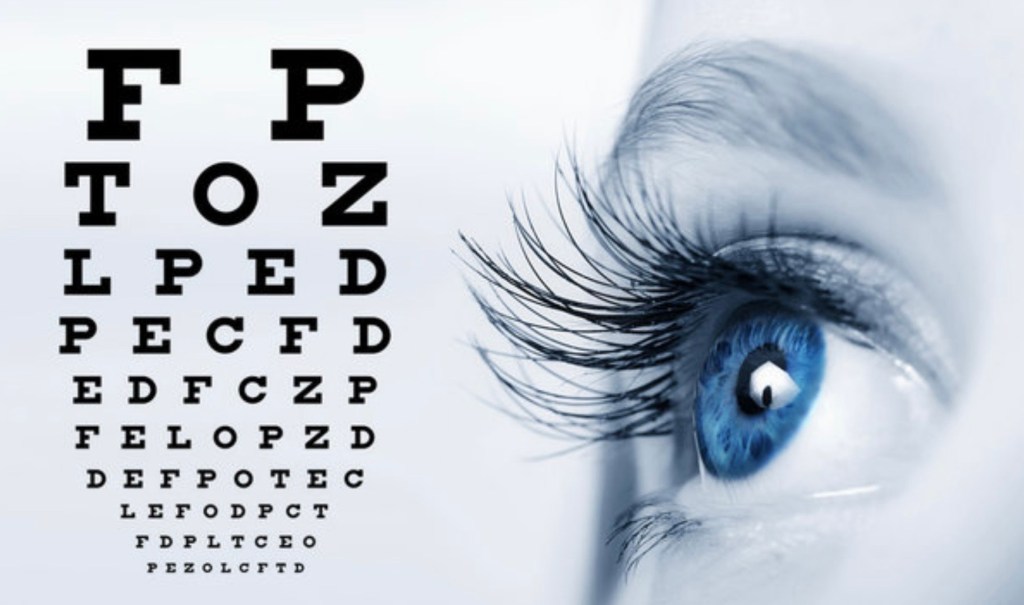
I would like to explain the difference between being blind and legally blind. Blindness is a general medical term describing severe reduction in vision or complete vision loss. Total blindness refers to those with no light and form perception, where everything appears dark. Legally blind is more of a legal term to measure severe vision loss. It refers to people whose corrected visual acuity in their best eye is 20/200 or worse. My vision is 20/400. What that means if you compare my vision with someone with 20/20 vision (perfect vision) What I see from 20 feet, you can see from 400 feet.
The major causes of vision loss are; cataracts Glaucoma, age-related macular degeneration, diabetic retinopathy and uncorrected refractive errors. Refractive errors can be corrected with glasses and contact lens. Cataracts refers to the clouding of the eyes natural lens causing blurry vision and dimness. This is the leading cause of blindness worldwide. ( https://ophthalmology.wustl.edu/understanding-the-leading-causes-of-blindness/ )
I personally never knew anything about blindness until I experienced it. (Add to that my hearing problem, and it can be a bit much at times.) I always thought that someone who is blind could seeing nothing at all. In reality the severity of vision loss ranges quite a bit. For me, I don’t have blurry vision but I don’t see it all. I guess the “layman’s” version would go something like this. With my optic nerves so small not enough stimulus gets through to tell my brain all that I’m looking at. I get parts but not all. I see people, trees, flowers, animals as long as they are a good size. Details can be very troubling. The smaller it is, the harder it is for me to see. Corrective lens do not help me at all. I have a video magnifying machine that enlarges whatever I put under it. My iPad is a favorite for zooming in large so I can see what I’m looking at. E-books are delightful. I love reading and can enlarge the e-book to a font I can see. Unfortunately, I can’t drive. Thank God for family and friends to help me get where I need to go. Shopping is not the best experience. Seeing prices is impossible without using some device to make it larger. It’s also difficult to see the selection and sizes. Do I let my limitations stop me? Not really. If you see me in the grocery store, you will likely see my iPad out. I use it to zoom in and “see” what I’m looking for. I find many things by memorization, color, packaging etc. Where there’s a will, there’s a way. Being able to feel things is also helpful; such as a keyboard I can feel or garage code pad I can feel.
There are ways to help when you see someone struggling to see. You can offer assistance. Speak directly to the visually impaired person. Introducing yourself. Ask before helping. You can offer your elbow or arm, if they want a guide. Be descriptive with directions. If you’re in a group and sharing photos on your phone, don’t assume they aren’t interested. You can zoom the photo and even describe what’s in the photo. If the blind person has a “guide dog” never interact with the dog while it is working. For me, I have depth perception issues, especially on uneven surfaces. Stairs are tricky. Going up I’m fine, going down, I must be careful.
With physical vision we are different, but with spiritual vision we are in the same boat. No one knows what tomorrow holds. We must walk by faith. I’ve always loved the Bible verse found in 2 Corinthians 5:7, “For we walk by faith, not by sight. (NKJV). It’s human nature to depend on our senses. However as a believe in Jesus Christ, we must trust God in our everyday lives and decision making. Walking by faith is an active daily practice.
I hope this blog sheds some light on those you may encounter with visual limitations. Advocacy provides knowledge which can provide an understanding of how to be helpful to those around you. A good rule of thumb is to try putting yourself in the other persons shoes. What must it be like to live with their differences? Empathy goes a long way in blessing those around us.
Be blessed as you continue in your week.
Www.shannonkenleyhinson.com


